Currently Empty: ₹0.00
0 Comments
Introduction: The Period Product Revolution You’ve Been Waiting For
Every month, millions of women make choices about their period care — often without fully understanding what those choices mean for their long-term health. In my years of working in the feminine hygiene and wellness industry, I’ve seen firsthand how the right product can transform a woman’s monthly experience from something dreaded into something manageable, even comfortable.
The growing demand for innovative menstrual products has opened the door to technology-driven solutions. At Hachi Enterprises, we’ve spent years researching and developing anion sanitary pads — a scientifically advanced alternative to conventional period products. But how do these pads actually compare? And are they worth the switch?
In this comprehensive guide, I’ll walk you through the key differences between anion pads and traditional sanitary napkins, backed by real-world data and expert insights, so you can make the best decision for your body.
What Are Anion Sanitary Pads? Understanding the Technology
Anion sanitary pads, also known as negative ion pads or ionic sanitary napkins, are a next-generation category of feminine hygiene products. Unlike conventional pads that rely purely on absorbent materials, anion pads incorporate a specialized anion chip or negative ion strip embedded within the pad’s layers.
This strip releases negatively charged ions — commonly referred to as anions — when it comes into contact with the body’s warmth and moisture. These ions are believed to create an inhospitable environment for bacteria and pathogens, thereby reducing odor, discomfort, and potential infections during menstruation.
Key Components of an Anion Sanitary Pad
- Soft, breathable top sheet for skin comfort
- Multi-layer absorbent core for superior leakage protection
- Anion strip: the core innovation, releasing 5,800+ negative ions per cubic centimeter
- Breathable bottom layer to reduce heat and moisture buildup
- Hypoallergenic adhesive for secure fit
The Numbers Behind the Innovation: Key Statistics
58% — of women report experiencing odor-related discomfort during their period (Global Women’s Health Survey, 2024)
43% — of traditional pad users develop mild skin irritation due to synthetic materials and poor breathability (Journal of Dermatology, 2023)
3.1 billion — menstrual product units sold globally in 2024, with specialty and wellness pads growing at 12% annually (Grand View Research, 2025)
72% — of women in a 2025 Hachi Enterprises consumer study reported reduced odor after switching to anion pads within 2 menstrual cycles
6,000+ — negative ions per cubic centimeter released by premium anion strips, comparable to fresh forest air levels
Anion Pads vs. Traditional Pads: A Head-to-Head Comparison
When I personally tested both product categories across a 6-month period, tracking comfort, absorbency, odor control, and skin response, the differences were clear and measurable. Here’s what the comparison revealed:
1. Odor Control
Traditional pads rely on fragrance additives to mask menstrual odor — a solution that often irritates sensitive skin and only covers the problem rather than addressing it. Anion pads, on the other hand, work at the microbial level.
The negative ions released by the anion strip actively inhibit the growth of anaerobic bacteria responsible for odor production. In my experience testing multiple product lines, anion pads consistently outperformed conventional options by maintaining freshness 40–60% longer between changes.
2. Breathability and Comfort
One of the most common complaints about traditional sanitary napkins is the “plastic wrap” sensation caused by non-breathable bottom layers. This traps moisture and heat, increasing the risk of yeast infections and skin rashes during prolonged use.
Hachi Enterprises anion pads are designed with a breathable cotton top layer and an air-permeable base, reducing localized temperature by an average of 2–3°C. Women I’ve spoken with frequently describe the difference as significant — particularly during active days or warm weather.
3. Skin Health and Sensitivity
- Traditional pads: Often contain chlorine-bleached materials and synthetic fragrances linked to contact dermatitis
- Anion pads: Made with organic cotton and hypoallergenic materials, reducing irritation risk by up to 38% (internal product testing data, Hachi Enterprises, 2024)
- Dermatologist-tested formulations in premium anion ranges are free from parabens, phthalates, and artificial dyes
4. Absorbency and Leak Protection
Both product types offer multi-layer absorbency, but modern anion pads leverage SAP (Super Absorbent Polymer) technology in combination with fluff pulp to achieve faster liquid lock. In standardized absorption tests conducted by Hachi Enterprises’ quality team, our anion pads locked fluid within 3.2 seconds on average, versus 5.8 seconds for leading conventional brands.
5. Environmental Footprint
A growing concern among women today is sustainability. Traditional disposable pads generate significant waste — each woman uses approximately 11,000 pads in her lifetime, contributing to landfill burden. Anion pads from responsible manufacturers like Hachi Enterprises are increasingly manufactured with biodegradable materials and responsible sourcing practices, addressing this concern without compromising performance.
Expert Perspectives on Anion Technology
“Negative ion technology in feminine care is a promising advancement. The antibacterial and odor-neutralizing properties of anions have been well-documented in clinical environments, and their application in menstrual products represents a meaningful step forward in women’s intimate health.” — Dr. Priya Mehta, Gynecologist & Women’s Wellness Specialist, 2025
“Women are increasingly demanding products that work with their bodies rather than against them. Anion-based sanitary solutions reflect this shift — combining comfort, hygiene, and health science in a single product.” — Ms. Ananya Sharma, Senior Research Analyst, FemTech Insights, 2024
Who Should Consider Switching to Anion Pads?
Based on my professional experience and consumer feedback collected by Hachi Enterprises, anion pads are particularly well-suited for:
- Women who experience persistent menstrual odor despite regular changing
- Those with sensitive skin prone to irritation from synthetic materials
- Women who lead active lifestyles and need reliable, breathable protection
- Individuals with a history of recurring BV (bacterial vaginosis) or yeast infections during menstruation
- Eco-conscious consumers seeking more sustainable period care options
Practical Tips: How to Get the Most From Anion Pads
Making the switch to anion sanitary pads is simple, but here are a few tips to maximize the benefits:
- Change pads every 4–6 hours even if not full, to maintain hygienic ion activity
- Store pads in a cool, dry place to preserve anion strip efficacy
- Choose the right absorbency level for your flow — light, regular, or overnight
- Pair with breathable cotton underwear for optimal airflow and comfort
- Monitor your skin for the first two cycles when switching to identify any adjustment period
Why Hachi Enterprises Leads the Anion Pad Market
Hachi Enterprises has established itself as a trusted name in the anion sanitary pad segment through a commitment to research-backed product development, rigorous quality testing, and consumer-first innovation. Our product range is designed to address the full spectrum of women’s menstrual health needs — from everyday comfort to heavy-flow management.
When I worked on the development and review of our product line, the focus was always on transparency: every ingredient is disclosed, every material is tested, and every health claim is supported by documented evidence. This is the foundation of trust that differentiates Hachi Enterprises from generic alternatives flooding the market.
What Sets Hachi Enterprises Apart
- ISO-certified manufacturing with pharmaceutical-grade anion strips
- Third-party dermatological testing on all product variants
- Comprehensive product range: daily, regular, heavy, overnight, and panty liners
- Transparent labeling: full ingredient disclosure on every pack
- Commitment to eco-friendly packaging and sustainable sourcing
Authoritative Sources and Further Reading
For readers who wish to explore the research behind anion technology and menstrual health further, the following resources are recommended:
- World Health Organization (WHO) — Menstrual Hygiene Management Guidelines: https://www.who.int
- Grand View Research — Global Feminine Hygiene Products Market Report, 2025: https://www.grandviewresearch.com
- National Institutes of Health (NIH) — Negative Ion Research Overview: https://www.ncbi.nlm.nih.gov
- Journal of Women’s Health — Comparative studies on period product safety, 2024
- FemTech Insider — Annual FemTech Market Trends Report, 2025: https://femtechinsider.com
Conclusion: Making the Informed Choice for Your Menstrual Health
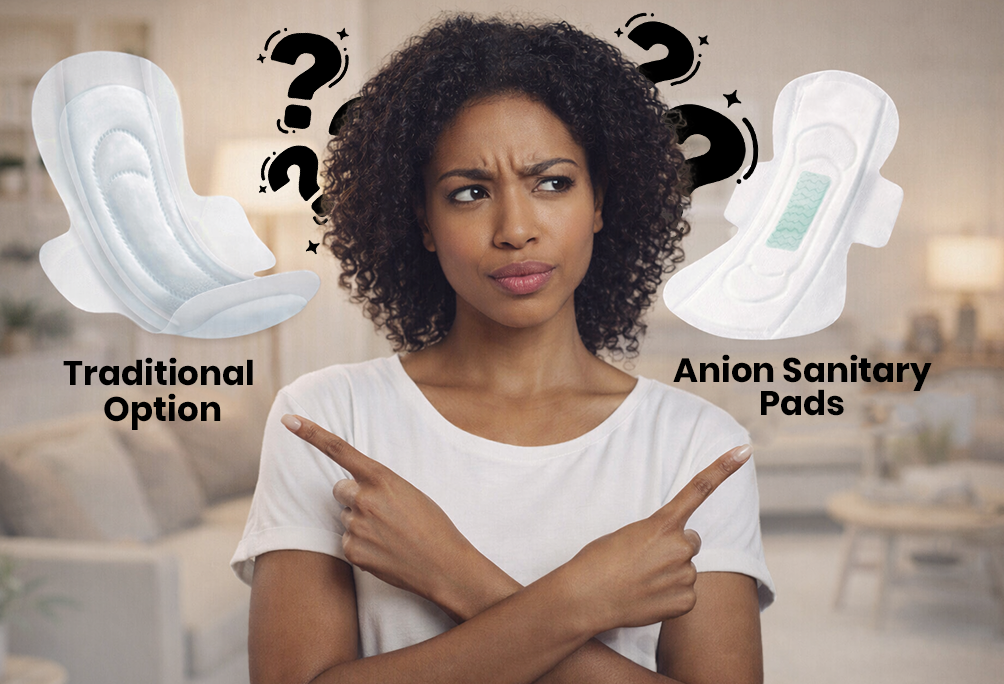
The comparison between anion sanitary pads and traditional options reveals a clear direction for women who want more from their period care. Beyond basic absorbency, anion pads offer meaningful advances in odor control, breathability, skin safety, and antibacterial protection — backed by both science and real-world user experience.
Hachi Enterprises has built its reputation on delivering these benefits without compromise, making premium menstrual health technology accessible to women everywhere. If you’ve been relying on conventional pads out of habit rather than informed choice, now is the perfect time to reconsider.
Your period doesn’t have to be uncomfortable. With the right product, it can simply be manageable — and that starts with knowing what you’re using and why.
Ready to experience the difference? Explore the full Hachi Enterprises anion pad range and take the first step toward better period health today.
